Optical Imagery Solutions
High-resolution satellite imagery for land cover mapping, change detection, and environmental monitoring with spectral precision.
What is Optical Satellite Imagery?
Optical satellite imagery captures reflected sunlight across visible and infrared wavelengths, similar to how a digital camera works. Unlike radar, optical sensors provide intuitive, photo-like images that are easy to interpret. Modern multispectral and hyperspectral sensors capture data in dozens of narrow spectral bands, revealing information invisible to the human eye.
From free, open-access Sentinel-2 and Landsat data to ultra-high-resolution commercial satellites like WorldView and Pleiades, optical imagery offers unparalleled versatility. It's the foundation for land cover classification, vegetation health assessment, urban planning, and countless other applications requiring visual interpretation and spectral analysis.
High Spatial Resolution
Commercial satellites deliver imagery down to 30cm resolution, enabling detailed mapping of infrastructure and small features.
Multi-Spectral Analysis
Capture data across visible, near-infrared, and shortwave infrared bands for vegetation indices, water detection, and material identification.
Visual Interpretation
Intuitive, photo-like images simplify interpretation and communication with stakeholders unfamiliar with remote sensing.
How Optical Imagery Analysis Works
Optical sensors measure reflected sunlight in specific wavelength ranges. Different materials reflect light differently across the spectrum: healthy vegetation reflects strongly in near-infrared, water absorbs infrared light, and urban surfaces have unique spectral signatures. By analyzing these patterns, we can classify land cover, detect changes, and extract quantitative information about the Earth's surface.
- Vegetation Indices NDVI, EVI, SAVI, NDWI for crop health, biomass, and water stress assessment.
- Land Cover Classification Supervised and unsupervised methods using spectral signatures.
- Change Detection Multi-temporal analysis to track deforestation, urban expansion, and natural disasters.
- Object-Based Analysis Segment images into meaningful objects for improved classification accuracy.
- Pan-sharpening Fuse high-resolution panchromatic with multispectral bands for enhanced detail.
- Atmospheric Correction Remove haze, smoke, and atmospheric effects for accurate surface reflectance.
Where Optical Imagery Delivers Value
Agriculture & Precision Farming
Monitor crop health, estimate yields, assess irrigation effectiveness, and detect pest or disease outbreaks. NDVI and other indices reveal plant vigor invisible to the naked eye, enabling data-driven farm management.
Forestry & Deforestation Monitoring
Track forest cover change, detect illegal logging, assess wildfire damage, and support REDD+ programs. Time-series analysis reveals deforestation trends and helps enforce conservation policies.
Urban Planning & Infrastructure
Map urban growth, assess land use, plan new developments, and monitor construction progress. High-resolution imagery provides the base data for GIS analysis and master planning.
Environmental Monitoring
Assess wetland health, track coastal erosion, monitor water quality, and map habitat types. Multispectral data supports biodiversity assessments and environmental impact studies.
Disaster Response & Recovery
Rapidly assess flood extent, map earthquake damage, monitor wildfire progression, and support post-disaster recovery planning. Cloud-free imagery is critical for emergency response.
Mining & Resource Management
Monitor mining operations, track vegetation reclamation, assess environmental compliance, and plan extraction activities. Historical imagery documents site evolution over decades.
Our Optical Imagery Data Portfolio
We provide access to both free, open-source imagery for large-area monitoring and commercial high-resolution data for detailed site analysis.
Sentinel-2 (ESA)
Free & Open: 13 spectral bands, 10m resolution, 5-day revisit. Ideal for regional vegetation and land cover monitoring.
Landsat 8/9 (USGS/NASA)
Historical Archive: 40+ years of data, 30m resolution, 11 spectral bands. Essential for long-term change analysis.
WorldView-3 (Maxar)
Ultra-High Resolution: 31cm panchromatic, 1.24m multispectral, 8 bands. Detailed infrastructure and urban mapping.
Pleiades (Airbus)
High Resolution: 50cm panchromatic, 2m multispectral, daily revisit. Flexible tasking for time-critical projects.
Planet SkySat
High-Frequency Monitoring: 50cm resolution, daily global coverage. Track rapid changes with frequent revisits.
SPOT 6/7 (Airbus)
Medium Resolution: 1.5m panchromatic, 6m multispectral. Cost-effective solution for regional projects.
Spectral Indices & Derived Products
Beyond raw imagery, we generate value-added products tailored to your application needs. These indices and classifications provide actionable insights from multispectral data.
- NDVI (Vegetation Health) Standard measure of plant vigor and biomass.
- NDWI (Water Detection) Identify water bodies and assess moisture content.
- NDBI (Built-Up Areas) Map urban and built-up land.
- Soil-Adjusted Indices SAVI, MSAVI for areas with exposed soil.
- Burn Severity Index Assess wildfire damage and recovery.
- Land Surface Temperature Derived from thermal infrared bands (Landsat).
Explore Our Optical Imagery Outputs
Discover how we translate multispectral imagery into actionable geospatial intelligence. Here are examples of our processing outputs, from classification maps to change-detection analysis.
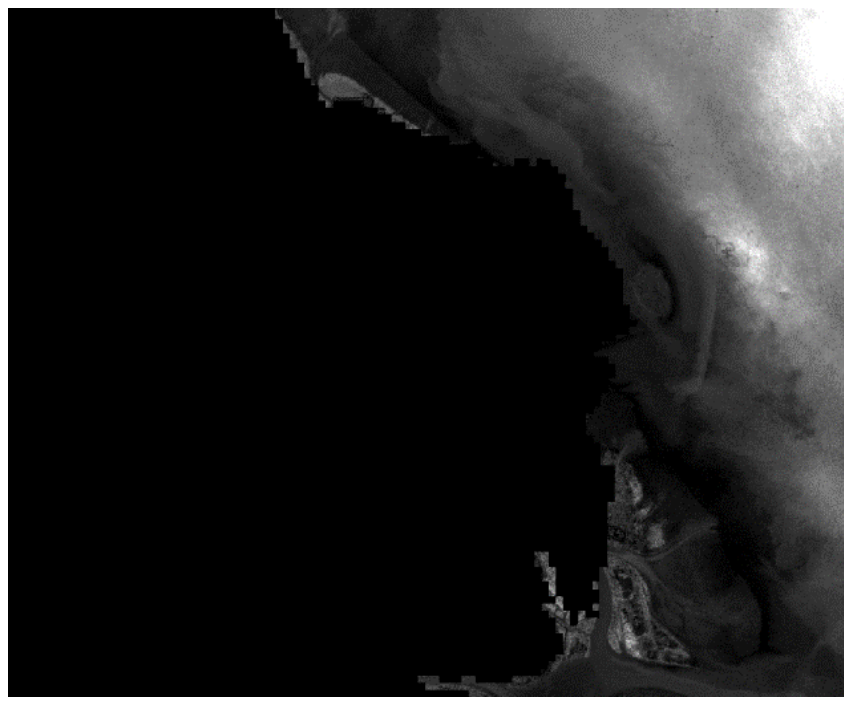
Water Quality Mapping - Porong River
Sentinel-2 derived Total Suspended Solids (TSS) estimation mapping sediment concentration in the Porong River estuary, Sidoarjo.
Source: Bioresita et al. (2018), Elipsoida: Jurnal Geodesi dan Geomatika, 1(1)
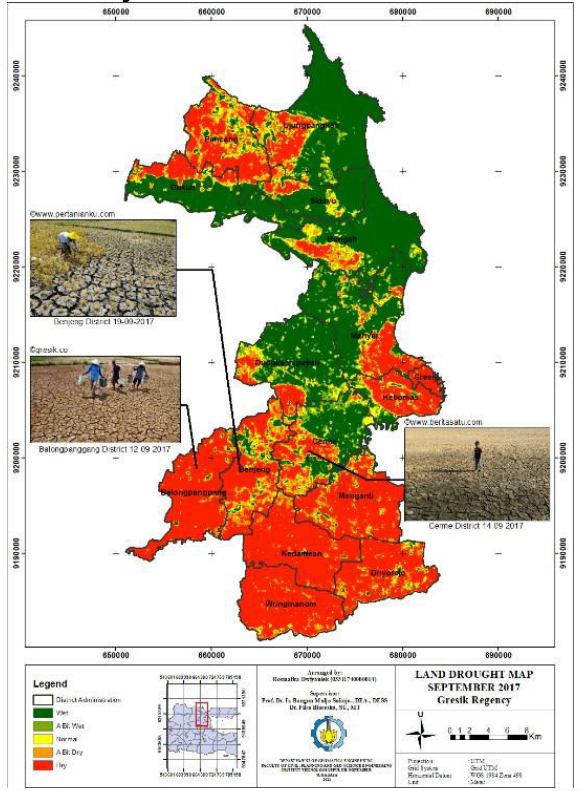
Multi-Temporal Drought Monitoring - Gresik
Landsat 8 time-series analysis (2015–2020) via Google Earth Engine using the Temperature Vegetation Dryness Index (TVDI) to track drought severity across Gresik Regency.
Source: Dwiyaniek, Sukojo & Bioresita (2021), IOP Conf. Ser.: Earth Environ. Sci. 936, CC BY 4.0
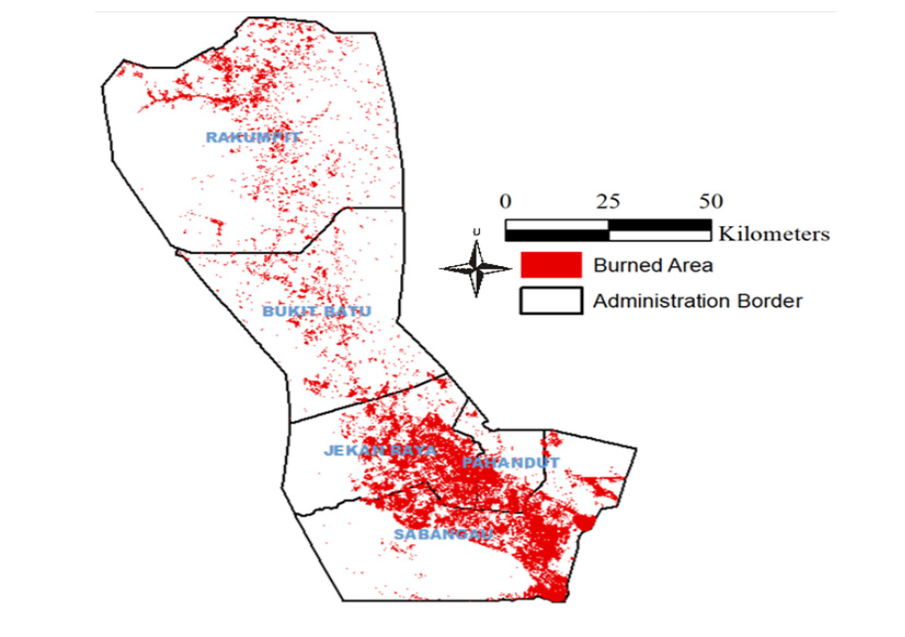
Forest Fire Impact Assessment - Palangka Raya
NBR2-based burned area mapping and vegetation health change detection following forest fires in Central Kalimantan.
Source: Bioresita, Pongdatu, Hayati et al. (2025), Indonesian Journal of Forestry Research, 12(1)
See the World Through Spectral Eyes
Discover what optical satellite imagery can reveal for your project.
Get a Consultation