LiDAR Mapping
High-precision 3D laser scanning for topographic mapping, digital terrain models, and point cloud analysis with centimeter accuracy.
What is LiDAR?
LiDAR (Light Detection and Ranging) is an active remote sensing method that measures distance by illuminating targets with laser light and analyzing the reflected pulses. By emitting millions of laser pulses per second from airborne or terrestrial platforms, LiDAR generates highly accurate 3D point clouds representing the Earth's surface and objects upon it.
Unlike photogrammetry or radar, LiDAR can penetrate vegetation canopy to reach the ground beneath, enabling the creation of "bare-earth" Digital Terrain Models (DTMs) even in heavily forested areas. The resulting data provides unparalleled detail for topographic mapping, infrastructure design, flood modeling, and countless other applications requiring precise elevation information.
Centimeter Accuracy
Achieve vertical accuracy of ±5cm and horizontal accuracy of ±10cm, essential for engineering-grade surveys.
High Point Density
Capture point clouds with densities exceeding 50 points per square meter, revealing fine surface details.
Canopy Penetration
Multiple returns allow ground detection beneath dense vegetation, impossible with optical methods.
How LiDAR Mapping Works
Airborne LiDAR systems emit laser pulses (typically 50,000 to 500,000+ per second) toward the ground. The system records the time it takes for each pulse to return, calculating the distance to the target. Combined with precise GPS positioning and inertial measurement units (IMUs), each laser return is georeferenced in 3D space. Multiple returns from a single pulse enable detection of canopy, mid-story, and ground surfaces, critical for vegetation mapping and bare-earth modeling.
- Multi-Return Processing First, intermediate, and last returns for full vertical structure.
- Ground Classification Automated algorithms separate ground points from vegetation and buildings.
- DTM & DSM Generation Create Digital Terrain and Surface Models from classified point clouds.
- Building Extraction Automated detection and 3D modeling of structures.
- Powerline Detection Identify overhead utilities and measure vegetation clearance.
- Flood Modeling High-precision elevation data for hydraulic modeling and inundation mapping.
Where LiDAR Excels
Topographic Mapping
Generate contours, cross-sections, and engineering-grade elevation models for infrastructure design. LiDAR-derived topography meets stringent accuracy requirements for roads, railways, and civil engineering projects.
Forestry & Vegetation Management
Estimate tree height, canopy structure, and biomass. Assess forest inventory, plan harvests, and monitor reforestation. LiDAR reveals vertical forest structure invisible to optical sensors.
Flood Risk Assessment
High-precision DTMs feed into hydraulic models predicting flood extent and depth. Critical for insurance underwriting, urban planning, and emergency preparedness.
Infrastructure Corridor Mapping
Survey roads, railways, pipelines, and powerlines with corridor-specific LiDAR. Identify encroachments, measure clearances, and plan maintenance efficiently.
Archaeological Surveys
Reveal hidden structures beneath forest canopy, from ancient temples to historic earthworks. LiDAR has revolutionized archaeology by exposing features invisible from the ground or in aerial photos.
Mining & Quarry Management
Calculate stockpile volumes, monitor pit progression, and design haul roads. Regular LiDAR surveys provide accurate volumetric data for inventory and planning.
Coastal & Shoreline Mapping
Bathymetric LiDAR (green laser) penetrates clear water to map seafloor topography. Essential for coastal engineering, marine navigation, and habitat mapping.
LiDAR Acquisition Methods
We offer multiple LiDAR acquisition platforms to match your project scale, budget, and accuracy requirements.
Airborne LiDAR (Manned)
Coverage of large areas utilizing manned aircraft equipped with professional sensors, providing an ideal solution for regional mapping. It delivers point densities ranging from 5 to 50 pts/m² and covers up to 1000 km² per day.
UAV (Drone) LiDAR
Flexible and highly detailed data collection using lightweight sensors on drones for project sites up to 10 to 20 km². It offers higher point densities exceeding 50 pts/m² with the advantage of rapid mobilization.
Terrestrial LiDAR
Ultra-high precision scanning based on the ground, perfect for detailed as-built surveys, monuments, and compact sites. It guarantees millimeter accuracy with densities reaching thousands of pts/m².
Mobile LiDAR
Corridor mapping executed through vehicle-mounted systems designed for roads, railways, and utilities. This method ensures efficient linear feature mapping while maintaining an accuracy of ±2 to 5cm.
Bathymetric LiDAR
Underwater mapping deploying green lasers that penetrate water to accurately map seafloor and riverbed topography. This approach is essential for analyzing coastal and aquatic environments.
Satellite LiDAR
Global coverage facilitated by systems like ICESat-2 and GEDI, providing spaceborne LiDAR data specifically tailored for large-scale forest and ice monitoring research applications.
LiDAR Deliverables
We deliver fully processed, QC'd LiDAR products ready for use in your GIS, CAD, or analysis software.
- Classified Point Clouds LAS/LAZ format with ground, vegetation, building classifications.
- Digital Terrain Model (DTM) Bare-earth elevation raster (GeoTIFF, ASCII grid).
- Digital Surface Model (DSM) First-return surface including vegetation and structures.
- Canopy Height Model (CHM) Vegetation height derived from DSM-DTM.
- Contours Vector contours at specified intervals (DXF, SHP).
- 3D Building Models Extracted building footprints and heights (CityGML, SHP).
- Cross-Sections Elevation profiles for engineering design.
- Intensity Images Grayscale rasters from laser return intensity.
Explore Our LiDAR Outputs
Discover how we translate raw point cloud data into actionable geospatial intelligence. Here are examples of our processing outputs, from bare-earth terrain models to heritage-grade 3D documentation.
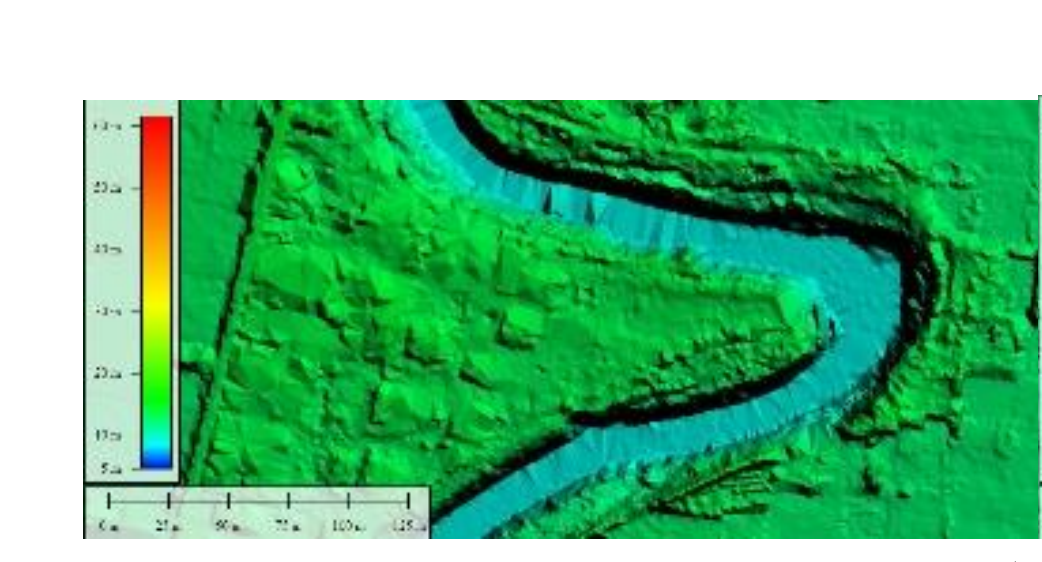
Hydro Enforcement LiDAR DTM — Kebumen
Bare-earth Digital Terrain Model derived from airborne LiDAR using the hydro enforcement method, achieving 4.6 m vertical accuracy (LE90) validated against 1:25,000 topographic maps.
Source: Sukojo, Hayati & Usriyah (2021), IOP Conf. Ser.: Earth Environ. Sci. 936, CC BY 3.0
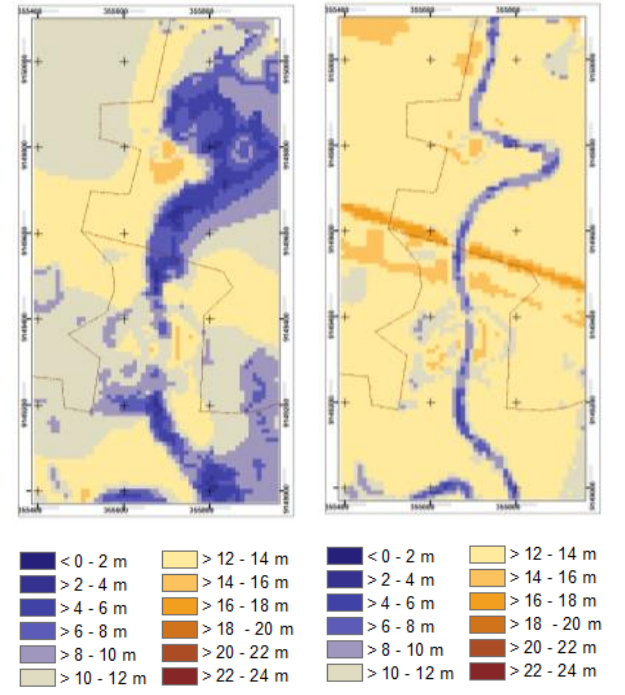
LiDAR–InSAR DTM Assimilation
Integrated DTM combining airborne LiDAR with InSAR-derived elevation data, improving vertical accuracy to 4.1 m LE90 compared to InSAR alone at 9.6 m.
Source: Sukojo, Hayati & Usriyah (2021), IOP Conf. Ser.: Earth Environ. Sci. 936, CC BY 3.0
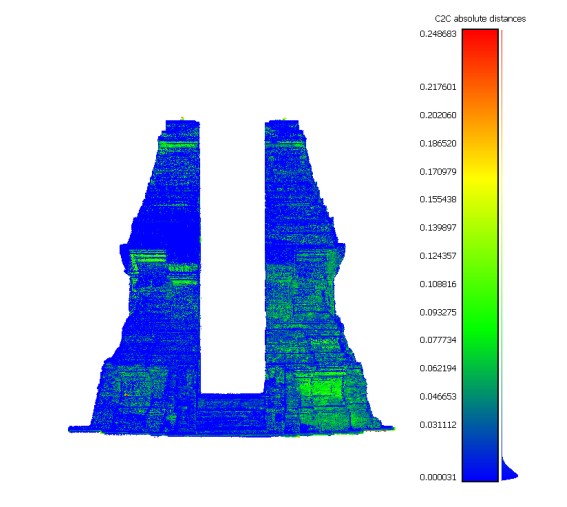
Heritage 3D Documentation — Majapahit Sites
Terrestrial and airborne laser scanning used to generate dense, high-fidelity point clouds of up to 118 million points for 3D documentation of Majapahit-era archaeological structures in Trowulan.
Source: Bioresita, Hidayat et al. (2025), ISPRS Archives XLVIII-M-9-2025, CC BY 4.0
Elevate Your Project with LiDAR Precision
Contact us for a custom LiDAR solution tailored to your needs.
Get a Consultation