InSAR Technology
Interferometric Synthetic Aperture Radar for precision ground deformation monitoring with millimeter-level accuracy.
What is InSAR?
Interferometric Synthetic Aperture Radar (InSAR) is an advanced remote sensing technique that measures ground surface deformation by comparing radar signals acquired at different times. By analyzing the phase difference between two or more SAR images, InSAR can detect surface movements as small as 1 millimeter per year over large areas.
Unlike traditional surveying methods, InSAR operates in all weather conditions, day or night, and can monitor vast areas simultaneously. This makes it an invaluable tool for tracking subsidence, landslides, volcanic activity, seismic deformation, and infrastructure stability.
Precision Monitoring
Detect surface movements down to 1mm per year with sub-centimeter accuracy across monitoring campaigns.
Wide Area Coverage
Monitor hundreds of square kilometers in a single image, ideal for large-scale infrastructure and regional studies.
All-Weather Capability
SAR waves penetrate clouds, rain, and darkness, ensuring continuous monitoring regardless of conditions.
How InSAR Works
InSAR technology compares the phase information of radar signals reflected from the Earth's surface at different times. When the surface moves between acquisitions, the phase shift reveals the direction and magnitude of displacement. Advanced processing techniques like Persistent Scatterer (PS-InSAR) and Small Baseline Subset (SBAS) enable time-series analysis for monitoring trends over years.
- Phase Coherence Analysis Identify stable measurement points with high signal quality.
- Time-Series Processing Track displacement evolution over multiple years.
- Multi-Satellite Integration Combine data from Sentinel-1, TerraSAR-X, COSMO-SkyMed, and more.
- 3D Vector Decomposition Resolve vertical and horizontal motions from multiple orbital geometries.
- Atmospheric Correction Remove tropospheric delays for enhanced data accuracy.
- WebGIS Integration Ready Export displacement results directly to interactive platforms like Leaflet or CesiumJS for advanced 3D visualization.
Where InSAR Makes an Impact
Mining & Resource Extraction
Monitor ground subsidence, pit wall stability, and tailings dam integrity to prevent structural failures and optimize planning.
Infrastructure Monitoring
Assess the structural health of bridges, dams, railways, and highways. Early detection enables preventive maintenance.
Oil & Gas Operations
Monitor subsidence from reservoir depletion and track injection-induced uplift, critical for regulatory compliance.
Landslide & Slope Stability
Detect slow-moving landslides and assess slope instability before catastrophic failure in unstable terrain.
Volcanic & Seismic
Track crustal deformation related to magma movement and earthquake precursors for hazard assessment.
Urban Development
Monitor land subsidence in cities experiencing groundwater extraction to protect infrastructure and inform planning.
Explore Our InSAR Outputs
Discover how we translate raw radar data into actionable geospatial intelligence. Here are examples of our processing outputs, from static deformation maps to interactive 3D time-series models.

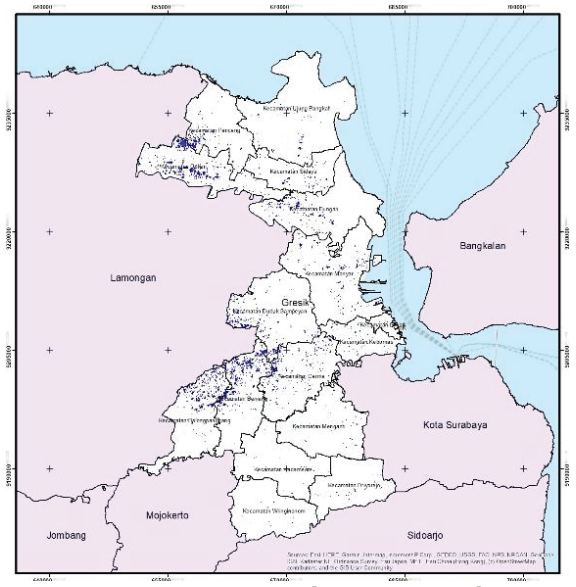
Gresik Flood Inundation Mapping
InSAR coherence ratio and Sentinel-1 backscatter analysis mapping the February 2024 flood extent across Gresik Regency, East Java.
Source: Taslyanto, Bioresita & Hayati (2025), IOP Conf. Ser.: Earth Environ. Sci. 1551, CC BY 4.0
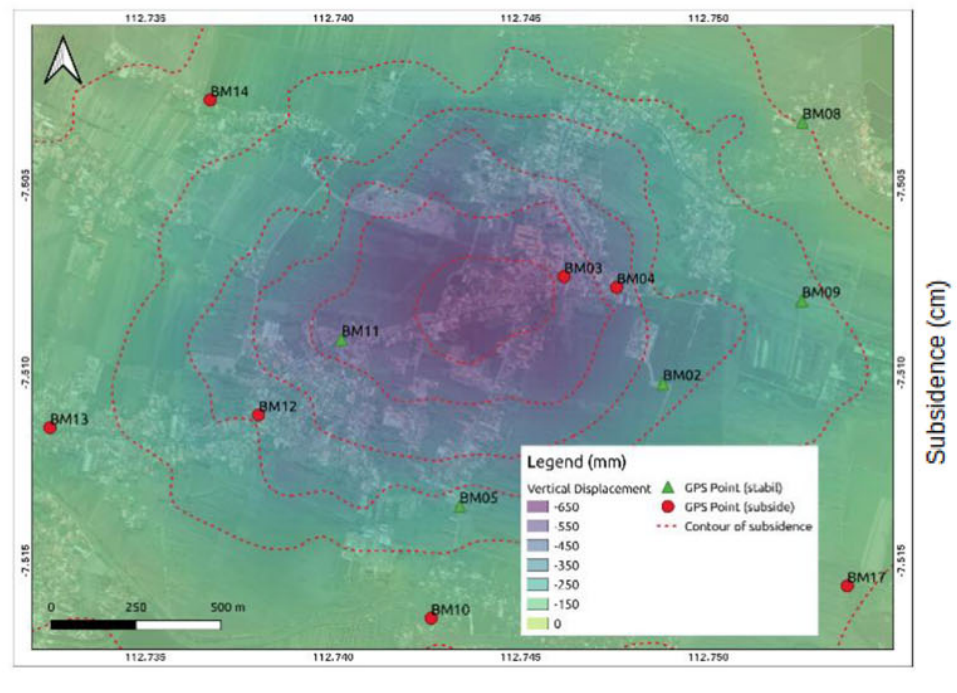
Sidoarjo Land Subsidence Monitoring
Small Baseline Subset (SBAS) InSAR time-series overlaid with GPS observations, revealing subsidence rates of up to 200 mm/year in flood-prone Sidoarjo villages.
Source: Hayati et al. (2022), Geo-spatial Information Science, 25(4), CC BY 4.0
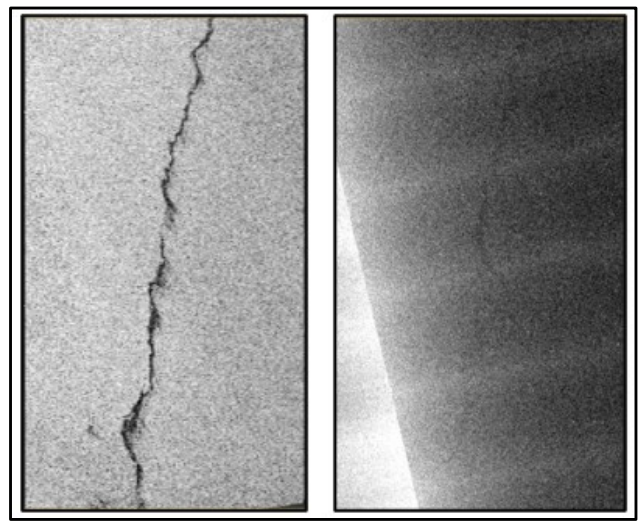
Oil Spill Detection — West Java Sea
Dual-polarization (VV/VH) Sentinel-1A SAR imagery used to detect and classify a 73,823 km² oil spill with 93.75% validation accuracy.
Source: Wardhana, Bioresita & Hayati (2025), INDERAJA 19(2), CC BY-NC-SA 4.0
Ready to Start Your InSAR Project?
Contact our team to discuss your ground deformation monitoring needs.
Get a Consultation