Target Scattering Analysis
Advanced polarimetric radar analysis for material classification, object detection, and surface characterization.
What is Target Scattering Analysis?
Target Scattering Analysis, also known as Polarimetric SAR (PolSAR) analysis, examines how radar signals interact with different materials and surfaces. By transmitting and receiving radar waves in multiple polarizations (HH, HV, VV, VH), we can extract detailed information about the physical properties, geometry, and orientation of targets on the ground.
This technology goes beyond simple brightness measurements, revealing the scattering mechanisms that occur when radar waves interact with vegetation, buildings, terrain, and other features. The result is a rich dataset that enables sophisticated classification, change detection, and material identification impossible with single-polarization radar or optical imagery alone.
Material Classification
Distinguish between water, vegetation, urban structures, bare soil, and more based on unique scattering signatures.
Object Detection
Identify ships, vehicles, aircraft, and infrastructure with high accuracy using polarimetric features.
Penetration Capability
L-band and P-band SAR can penetrate vegetation canopy to reveal underlying terrain and subsurface features.
How Polarimetric SAR Works
Polarimetric SAR measures the amplitude and phase of radar returns in different polarization combinations. Advanced decomposition techniques (e.g., Cloude-Pottier, Freeman-Durden, Yamaguchi) break down the scattering into fundamental mechanisms: surface scattering, double-bounce, volume scattering, and helix scattering. This reveals physical properties like surface roughness, dielectric constant, and geometric structure.
- Full Polarimetric Data Quad-pol acquisitions (HH, HV, VH, VV) for complete scattering matrix.
- H/A/Alpha Decomposition Entropy, anisotropy, and alpha angle for unsupervised classification.
- Freeman-Durden Decomposition Separate surface, double-bounce, and volume scattering contributions.
- Model-Based Classification Wishart, SVM, and Random Forest classifiers trained on polarimetric features.
- Ship Detection Automated detection and classification of vessels in maritime environments.
- Forest Biomass Estimation Retrieve aboveground biomass using L-band or P-band PolSAR.
Where Target Scattering Analysis Excels
Land Cover Classification
Generate detailed land cover maps distinguishing forests, croplands, urban areas, wetlands, and water bodies. Polarimetric features improve classification accuracy over single-pol SAR or optical data, especially in cloudy regions.
Maritime Surveillance
Detect and classify ships at sea regardless of weather or time of day. Distinguish vessels by size, orientation, and material. Critical for border security, fisheries monitoring, and oil spill detection.
Agriculture & Crop Monitoring
Identify crop types, assess plant health, and estimate soil moisture using polarimetric signatures. Monitor agricultural practices and support precision farming initiatives.
Forestry & Biomass Mapping
Estimate forest biomass, canopy structure, and tree height. L-band and P-band polarimetric data penetrate vegetation to reveal forest characteristics invisible to optical sensors.
Urban Analysis
Map building footprints, identify construction materials, and detect urban growth. Double-bounce scattering from building-ground interactions provides unique urban signatures.
Disaster Response
Rapidly assess flood extent, detect damaged infrastructure, and map landslides. Polarimetric SAR penetrates clouds and operates day/night, critical for emergency response.
Our PolSAR Data Sources
We utilize data from both spaceborne and airborne platforms to meet your project requirements, from regional mapping to high-resolution site analysis.
ALOS-2 PALSAR-2
L-band: Full quad-pol capability, excellent for forest and vegetation analysis. 3-6m resolution in high-res mode.
RADARSAT-2 / RCM
C-band: Full polarimetry with flexible imaging modes. Suitable for land cover, maritime, and agricultural applications.
TerraSAR-X / TanDEM-X
X-band: Dual-pol and experimental quad-pol modes. High-resolution urban and infrastructure analysis.
Airborne PolSAR
Custom Campaigns: L-band and P-band airborne systems for detailed site surveys and research applications.
Explore Our PolSAR Outputs
Discover how we translate polarimetric radar data into actionable geospatial intelligence. Here are examples of our processing outputs, from polarization comparisons to classification results.
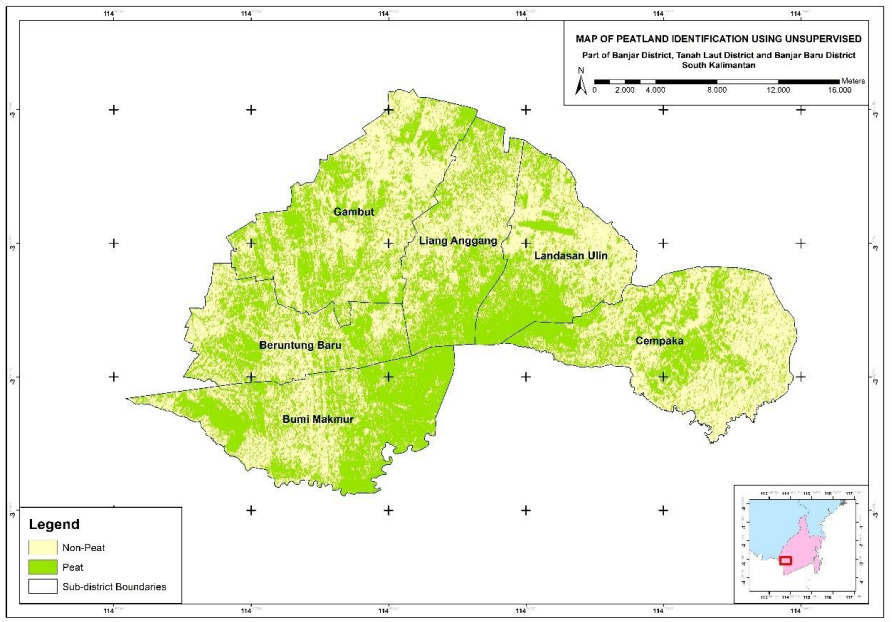
Polarization Combination Analysis - South Kalimantan
Comparison of VV, VH, and combined polarization outputs from Sentinel-1 for mapping flood inundation extent.
Source: Adiba & Bioresita (2023), IOP Conf. Ser.: Earth Environ. Sci. 1127
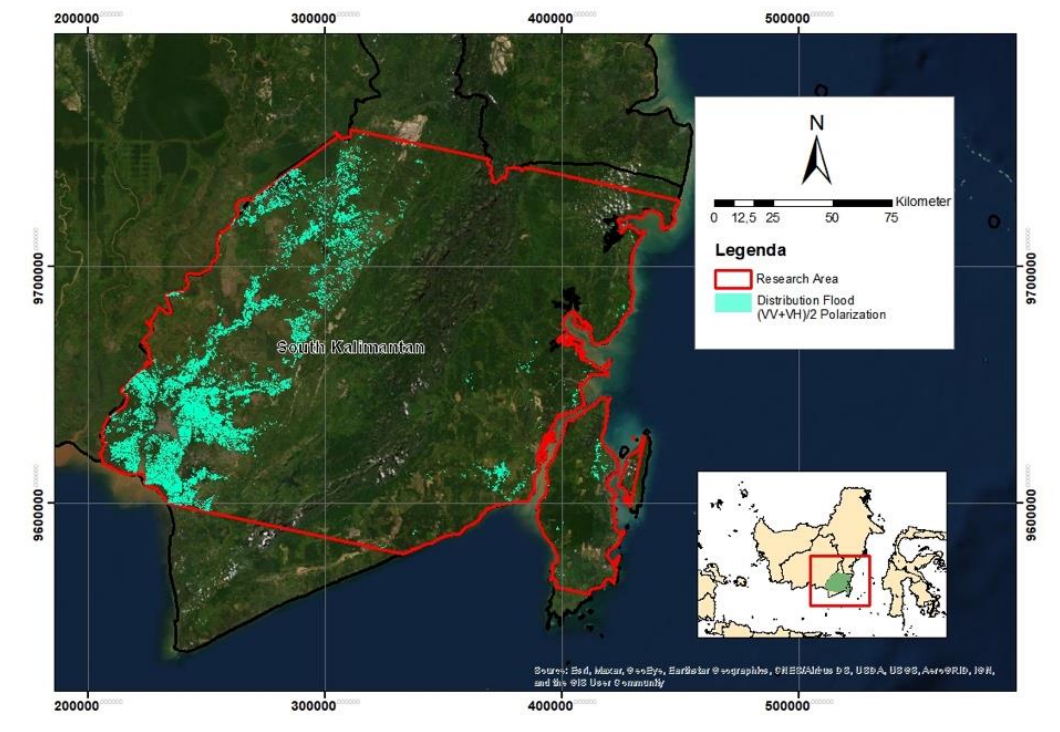
Dual-Pol Polarimetry - Peatland Classification
Sentinel-1 C-band dual polarimetric analysis applied to characterize and classify peatland surfaces in South Kalimantan.
Source: Ramadhani, Bioresita & Gasica (2024), IOP Conf. Ser.: Earth Environ. Sci. 1418
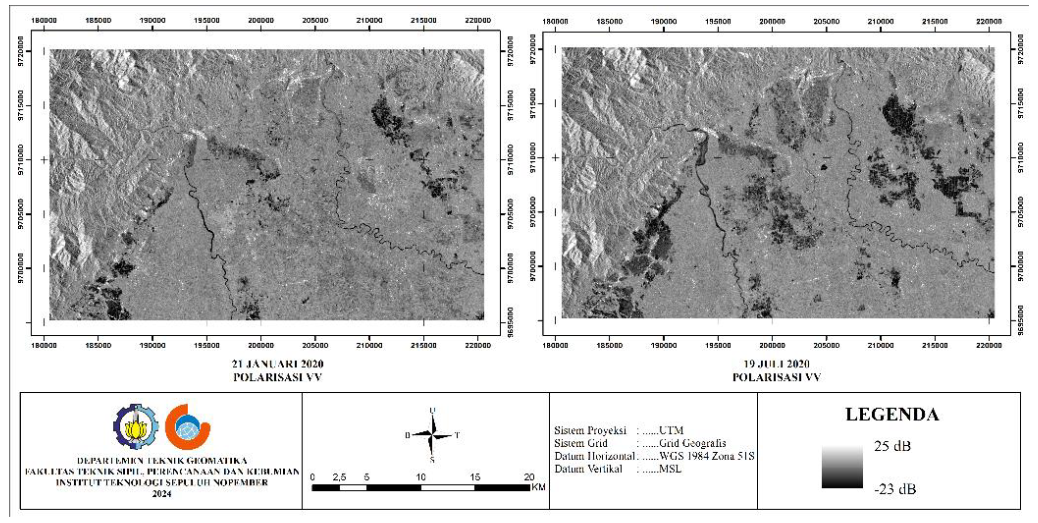
VV vs VH Comparison - Flood Detection, Masamba
Direct comparison of VV and VH polarization from Sentinel-1 imagery to identify the most accurate configuration for surface water extraction.
Source: Palgunadi & Bioresita (2024), Geoid, 19(3)
Unlock the Power of Polarimetric SAR
Let us help you extract maximum insight from radar scattering data.
Get a Consultation